
The second US presidency of Donald Trump, the clamp down on freedom of speech and protest in the context of the genocide in Palestine and the growing strengh of far right-wing, racist and authoritarian movements and parties in many areas of the world have led people to ask are we in fascist times. In this guest lecture by historian of fascism, Kian Aspinall, we examine whether fascism refers to a distinct era of modern European history (1920s-40s) or whether it can be observed at different times. For many people who face the brunt of state authoritarianism, in particular Black, Indigenous and colonised peoples, fascism has always been here.
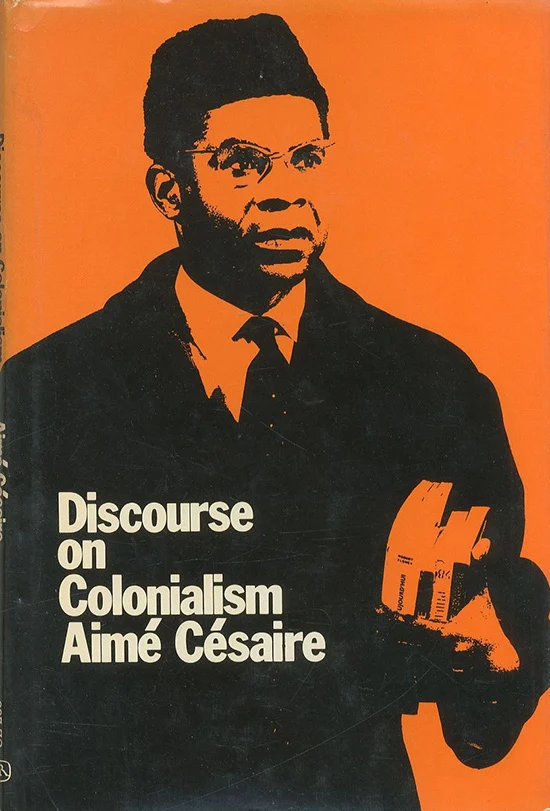
As the revolutionary imprisoned Black intellectual George Jackson wrote, the definition of fascism is not settled because of ‘our insistence on a full definition… looking for exactly identical symptoms from nation-to-nation.’ The Martinican intellectual and leader, Aimé Césaire famously wrote that Europeans ‘tolerated that Nazism before it was inflicted on them.’ He saw Nazi atrocities within Europe as being a reflection of what Europeans had done to people in the lands they had colonised for centuries.
In class we examine some of the main theories of fascism and relate them to the contemporary question of whether the US regime’s ICE raids, Australia’s imposition of draconian hate speech legislation and the violent crack-down on protest, etc. are well served by thinking about them as fascist.
Tutorial Activity – Download the PDF
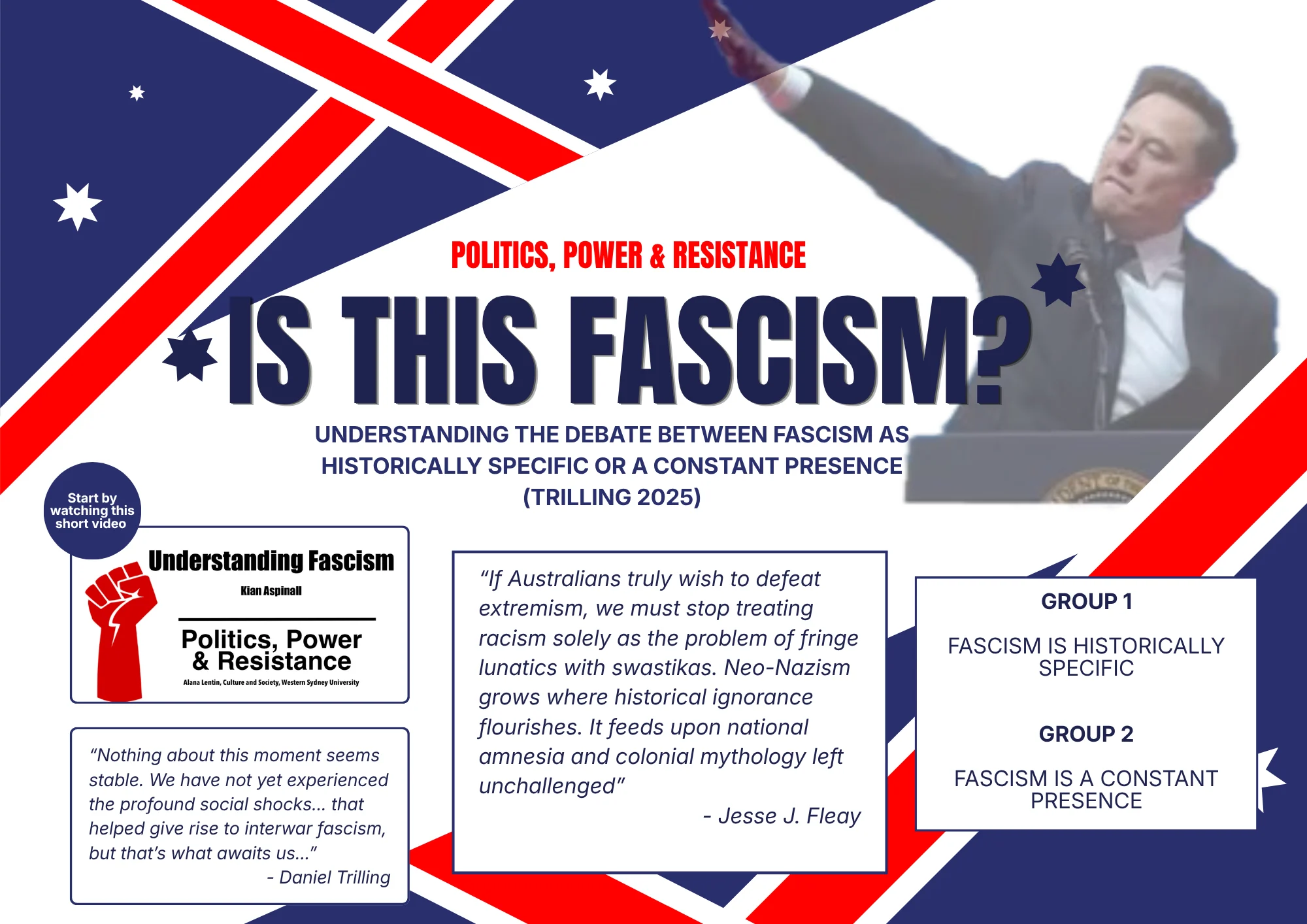
For this tutorial activity:
- Read ‘Is This Fascism?’ by Daniel Trilling.
- Watch from 30.08-36.17 of the interview with Kian Aspinall. He explains why he subscribes to the idea that fascism cannot be confined to the interwar era and to Italy and Germany alone.
- Read ‘The ghost of White Australia has finally been named’ by Jesse J. Fleay
- Divide the class into two groups, the first advocating for fascism to be confined to a historically specific time and place, the second arguing that it is a constant presence.
Consider the following:
What socioeconomic conditions have to be in place and to what extent do they have to affect the majority of society?
What is the impact of nationalism and racism?
What is the impact of debates about immigration and borders?
Is a successful fascist party necessary?
To what extent is a populist leader a necessary feature?
What is the role played by conspiratorialism?
What is the role of authoritarianism and the curtailment of civil rights?